FTC Disclosure: If you make a purchase via a link on this site, We may receive a small commission on the transaction - at no added cost to you. Thank you!
Albino Hummingbirds,
Up Close and Personal
The Albino Humminbird is a result of an incredibly rare genetic mutation.
The other close relatives of the Albino Hummingbird are a Leucistic Hummingbird and a Pied or Piebald Hummingbird.
We Now Have A White Hummingbird
Sightings Report Map
Report your White Hummingbird Sightings along with your photos of this rare occurance to the map.
Our visitors will be able to see if there are any sightings near their location in hopes to attract one to their feeders.
See The White Hummingbird Sighting Report Form Below
See The White Hummingbird Sighting Report Map Below
How To Identify Albino, Leucistic and Pied Hummingbirds
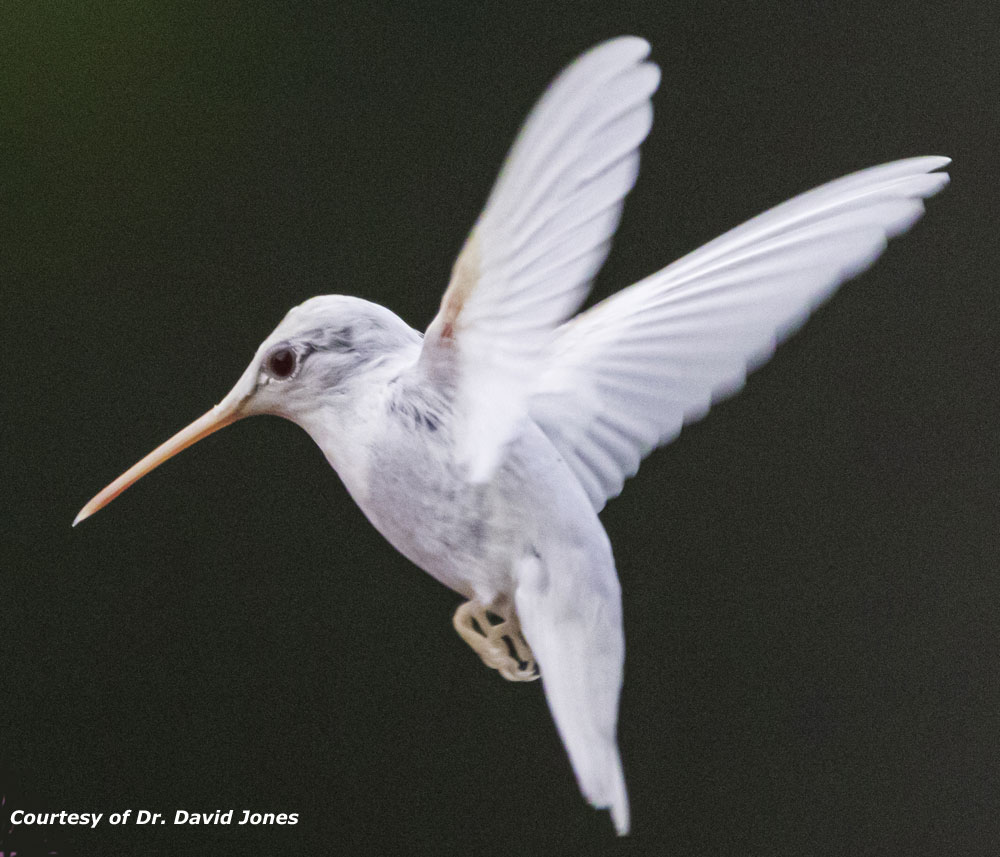
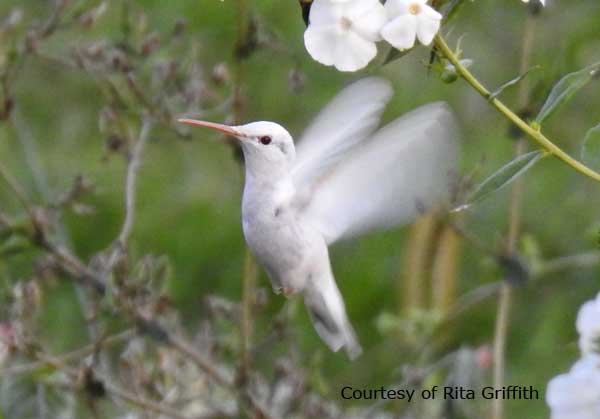
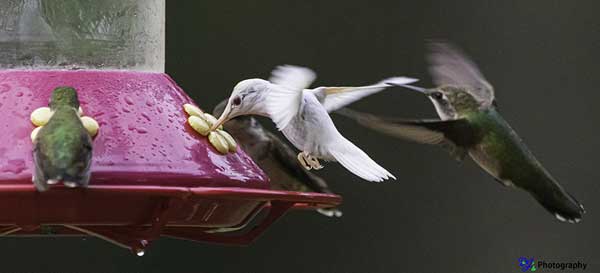
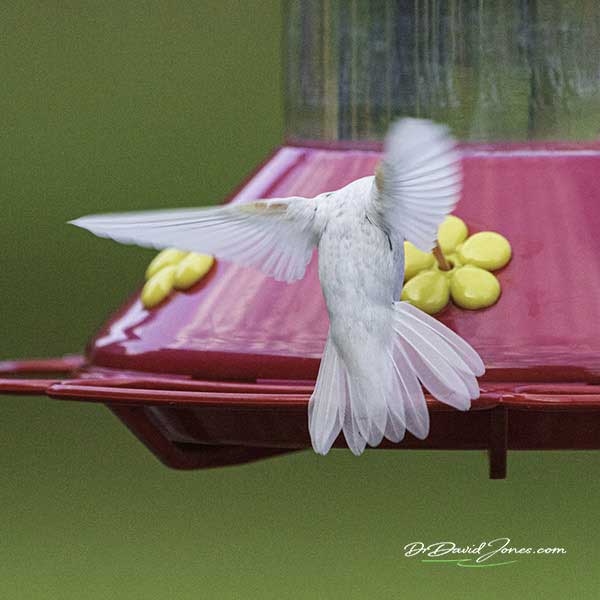
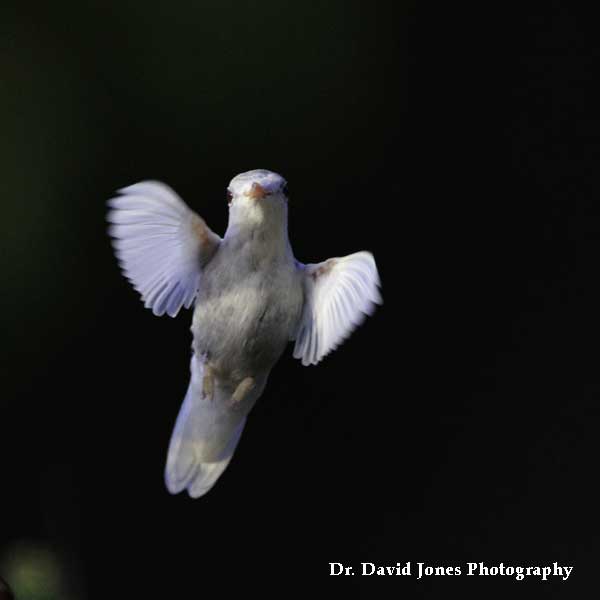
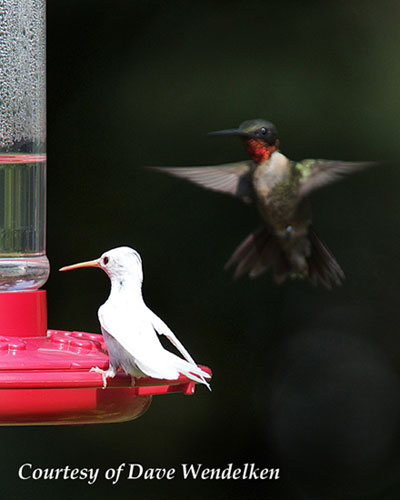
Albino Hummingbird Characteristics
- Pink Eyes
- Pink Bill
- Pink Feet
- Pink Skin
- Pure White Feathers
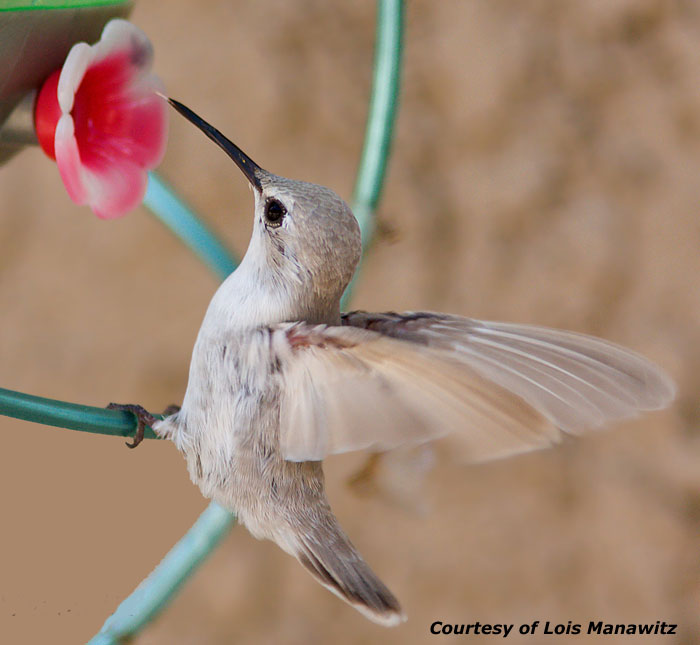
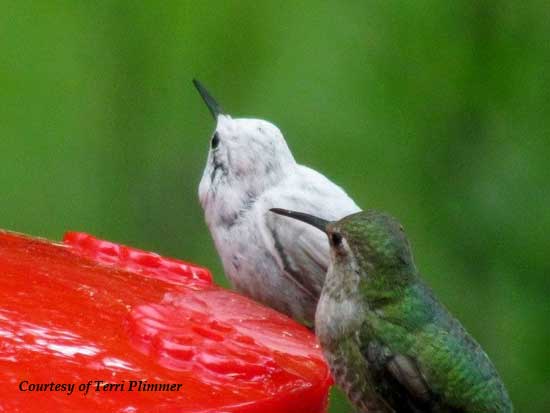
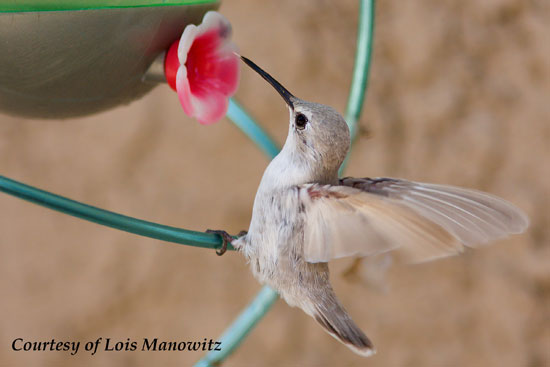
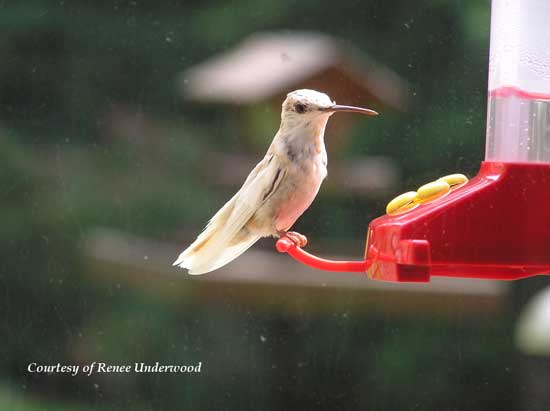
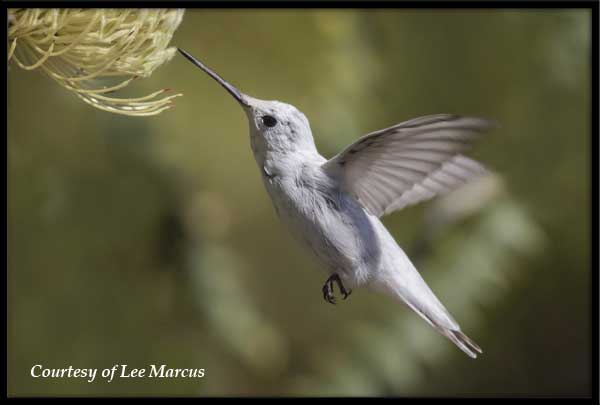
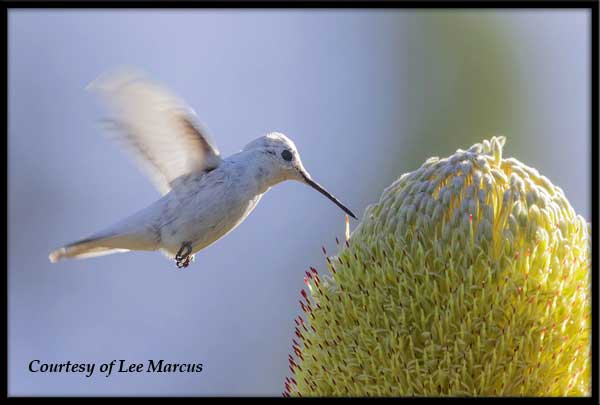
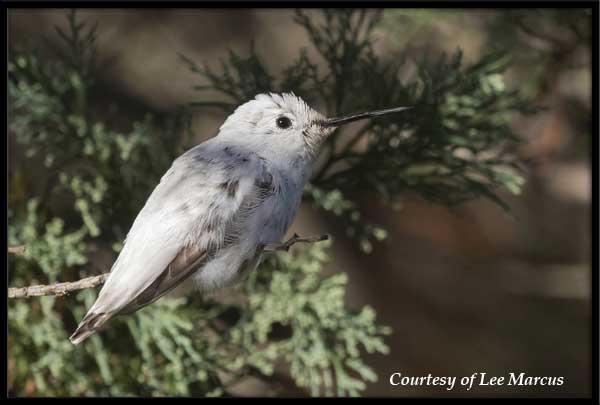
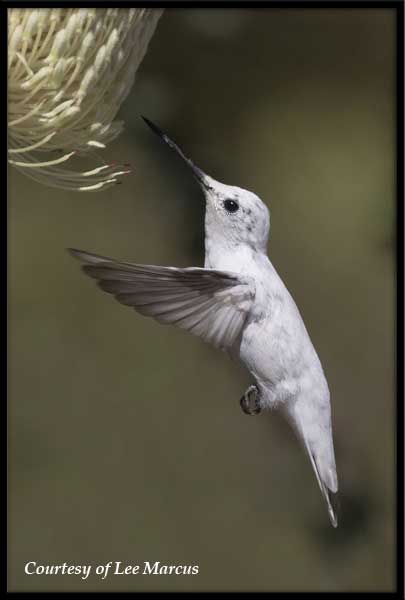
Leucistic Hummingbird Characteristics
- Dark Eyes
- Dark Bill
- Dark Feet
- Off White, Light Gray, Pale Feathers
The lack of pink eyes, bill and feet seperate these creatures from being a true albino hummingbird.
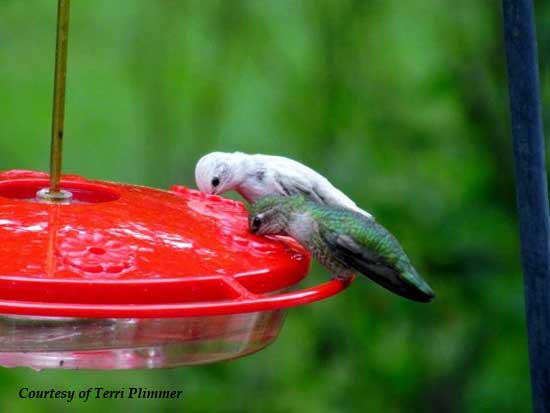
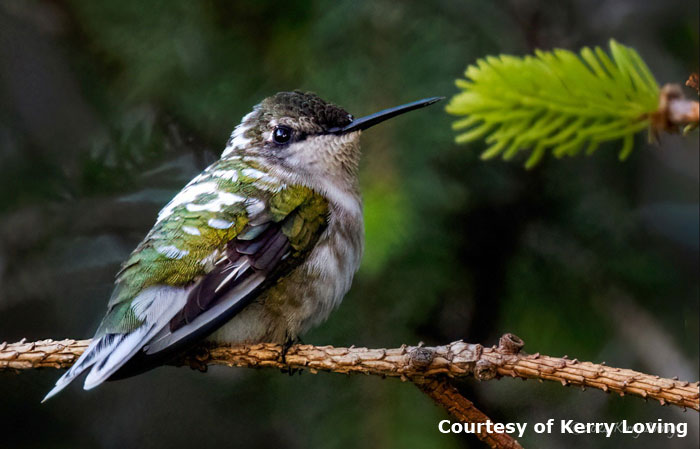
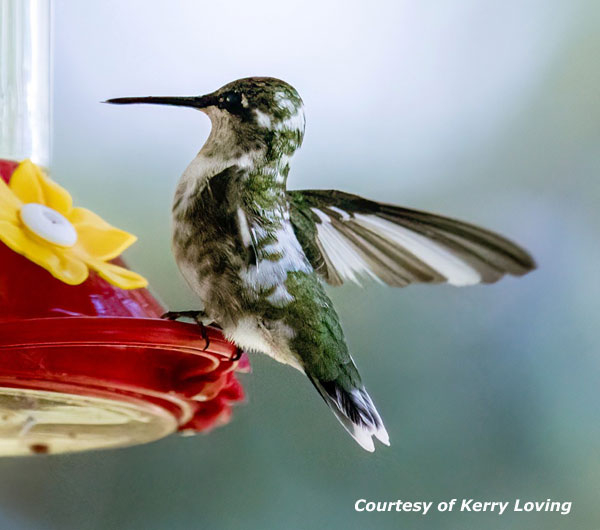
Pied Hummingbird Characteristics
- Dark Eyes
- Dark Bill
- Dark Feet
- Blotchy White Mixed With Their Natural Color Feathers
Pied or Piebald hummingbirds can have varying degrees of white feathers which are mixed with their natural color feathers.
What Causes Albinism In Hummingbirds?
To help us make this distinction, let's start with the definition of "albino".
An Albino Hummingbird has a rare genetic mutation that prevents the production of any Melanin, which is a natural pigment that determines skin tone, eye color, bill color, feet color and feather color in hummingbirds.
The results of no melanin are pink eyes, pink bills/beaks, pink feet and white feathers.
More melanin produces darker colors while less melanin produces lighter colors.
This recessive gene only shows up if the bird inherits the gene from both parents.
What Causes Leucism in Hummingbirds?
Most hummingbirds with abnormal plumages are leucistic.
These hummingbirds, not as rare as albino humminbirds, often lack some but not all melanin.
A Leucistic Hummingbird generally has white, off-white, or tan plumage.
Their eyes, beak, and feet are black showing normal pigments on these body parts.
What Causes Piebaldism in Hummingbirds?
Some hummingbirds with abnormal plumages are pied (piebald).
Piebaldism in hummingbirds results in irregular patches of white feathers mixed with their normal colorful plumage.
Unlike albinism or leucism, piedbaldism is a result of a cell distribution of melanin migrating to certain feather areas but not all feather areas.
The result of this is a "patchy" look of white mixed with natural color feathers.
Photos Of Albino Humminbirds
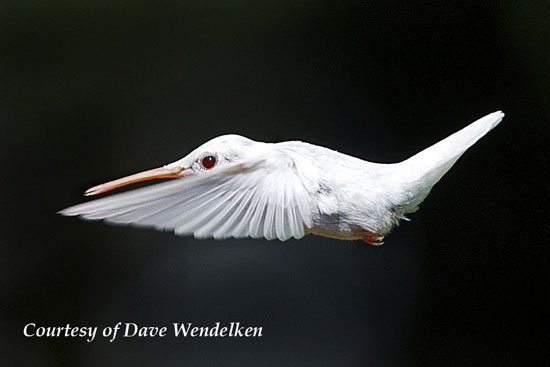
The following 2 images were kindly contributed by Rita Griffith.
A very lucky "Hummingbird Enthusiast"!
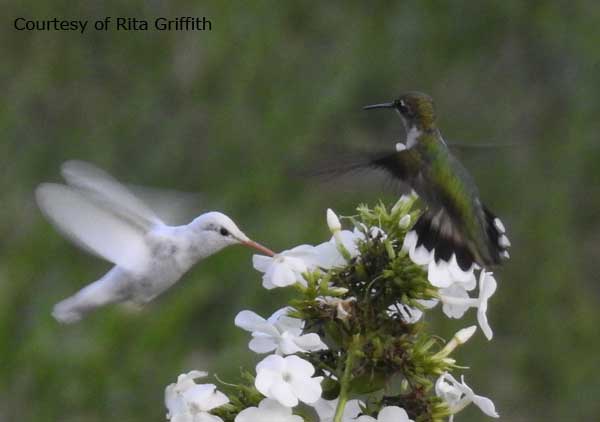
A Rare Experience!
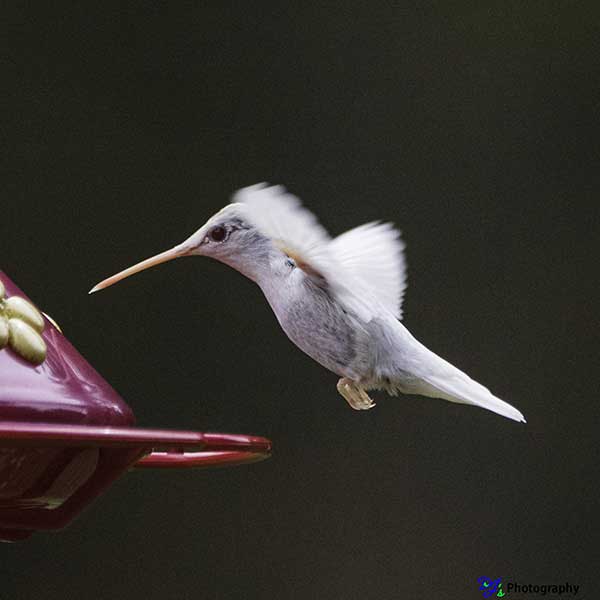
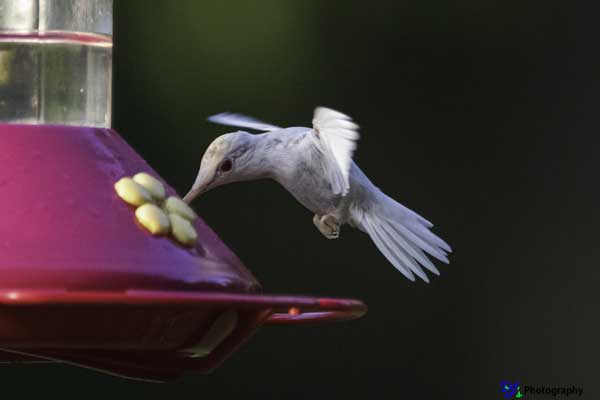
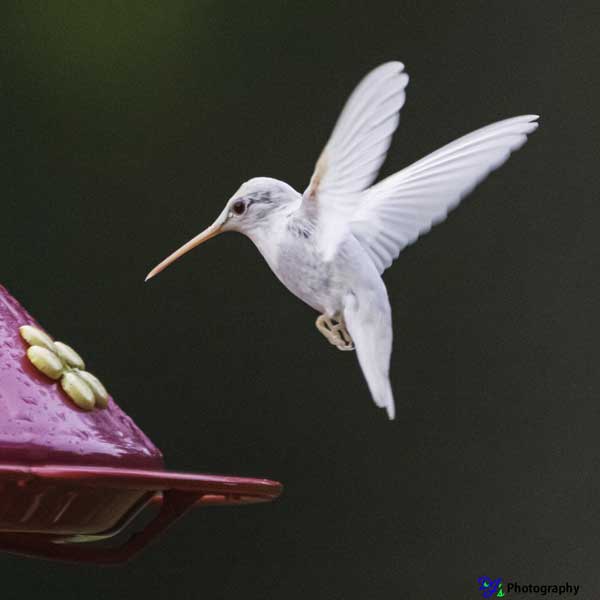
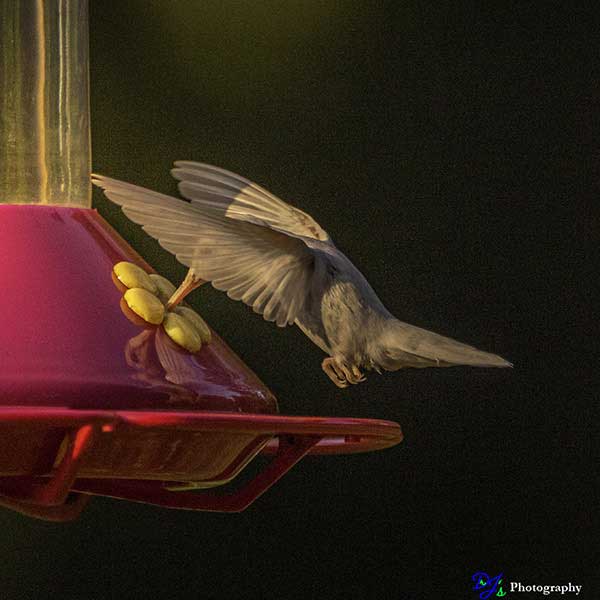
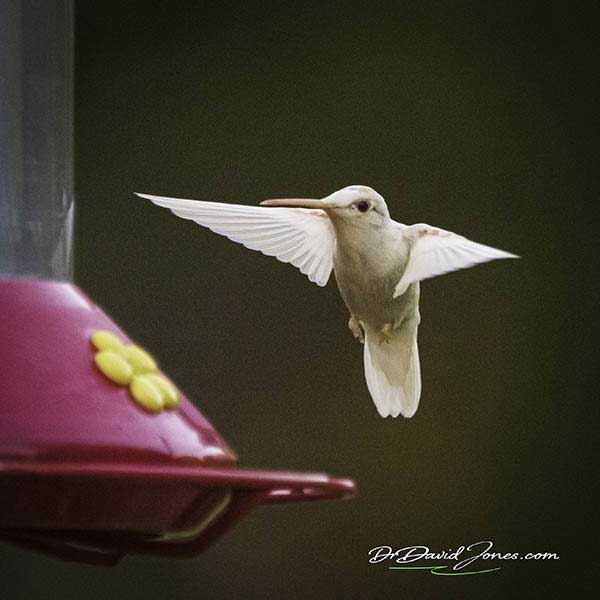
Here is a contribution from one of our visitors, Dr. David Jones, who had a very unique experience the Summer of 2019!
His story and beautiful photos:
"I thought after feeding hummingbirds for almost 25 years in my backyard I had all the photos of hummingbirds I ever needed.
Well on August 18, 2019, all of those thoughts changed.
I was looking out my backdoor and thought I'd seen a white bird going to the hummingbird feeder that was closest to the house, but I couldn't see the feeder to be sure.
I stepped out onto our enclosed patio to take a better look and low and behold, there was an albino hummingbird taking a drink.
We only have Ruby-Throated hummingbirds here in Muskogee, Oklahoma so I'm assuming that she is one too.
She wasn't sitting at the feeder but hovering taking a drink.
This became her/his (don't know how to determine sex without any coloring differences) MO for most of the 9 weeks "she" (as we decided right or wrongly) was with us.
She was predictable in many ways, she would only come to the feeders if other birds were also feeding at the same time.
She would fly to one of the big trees surrounding the backyard, then kind of just swoop down, kind of like you'd think an angel would fly, pick out her spot at the feeder and proceed to hover in place taking a drink.
She did this up until the 7th week when the great majority of the hummingbirds had moved on, then she (Debra named her "The Queen") decided that she didn't have any competition at the feeders or maybe she didn't have the shielding that the other birds gave her for protection, then she would sit like most of the others had.
She came to the feeders about every 20-25 minutes, starting early in the morning then skipping the mid part of the day returning in the afternoon and early evening.
Debra said I had become obsessed with "The Queen" since I was spending so much time observing and taking her photo.
We didn't think she was going to migrate but she hasn't been seen for 8 days now, we still have 1 or 2 immature's around, so we hope she took our encouragement to migrate for the winter and then take up our offer to return next year for the entire year.
I now have thousands of photos of hummingbirds, over 1500 just of the albino, from this year when I had no intention of taking even one."
Photos Of Leucistic Hummingbirds
Best Friends Enjoying Dinner Together!
Photos Of Pied Hummingbirds
Survival Challenges Of Albino, Leucistic
and Pied Humminbirds.
A theory among scientists is that this rare albino hummingbird does not make it through the migration due to a number of disadvantages:
- Color alone can possibly be a problem. Perhaps the white feathers are much too visible to predators.
- Possibly these feathers are brittle and break more easily.
- There might even be some genetic factors that weaken the bird before the natural life cycle of reproduction can allow for more albino hummingbirds to be born at all.
Formal scientific study has not been done at this time.
Hummingbirds are truly a wonder of nature.
Everything about hummingbirds is amazing.
It isn’t just the miniature size that fascinates us.
Perhaps, the spectacle beauty of hummingbirds with iridescent feathers that reflect light at certain angles does capture our imagination.
The interesting behavior of these birds is practically unrivaled.
With a metabolism that enables them to eat twice their body weight in nectar each day, these creatures expend energy almost beyond our comprehension.
A hummingbird beats it wings at a rate of 60 times per minute.
Only a hummingbird can fly forwards, backwards, upside down and hover in place.
Learn more about Hummingbird Flight.
A mother hummingbird builds her nest about the size of a walnut shell using spider webs.
Learn more about the Hummingbird Nest.
It has the largest brain of any bird comparable to its size and will return to the same feeders every year.
Learn How to Attract Hummingbirds.
For now, a mystery about this marvelous hummingbird will remain....... adding to the many reasons we continue to be intrigued by its charm.
Report Your Sighting
Albino, Leucistic, Pied Hummingbird Sightings Map

James and Ruth White are Certified Hummingbird Habitat stewards with the International Hummingbird Society, specializing in backyard hummingbird care, behavior, and conservation. With 45+ years of hands-on experience, they have cared for over 1,000 hummingbirds, built two large perennial gardens, and support a community of 30,000+ subscribers through hummingbird-guide.com, their widely followed migration map, and active social channels. They observe hummingbirds daily across 12 home feeders and document their behavior through photography and video.
Find Us Here!
 |
 |
 |
 |
 |
 |
 |
 |
 |
Stay in Touch
with the Latest!
Subscribe to the
"Hummer" Newsletter.
Have A Great
Hummingbird Story!
We Would Love
To Hear it!
FTC Disclosure: If you make a purchase via a link on this site, We may receive a small commission on the transaction - at no added cost to you. Thank you!
What's New


-
Stop Feeding Hummingbirds. When to take down your hummingbird feeders.
Aug 28, 26 11:15 AM
 If you stop feeding hummingbirds you will NOT starve them or interupt their migration schedule. There is a widespread myth that taking down feeders too early is detrimental to migration.
 -
Ruby-throated Hummingbird. Number One in the East!
Aug 15, 26 07:53 AM
 The Ruby-throated Hummingbird has a breeding range east of the Mississippi River. Learn about their habitat, behavior, migration and how to identify them.